You're probably staring at too many tabs right now, trying to decide if luxury trips to Italy are worth the effort or if you should just book the obvious five-star hotel and hope the rest falls into place. That's the trap. Italy rewards people who plan like operators, not like browsers, because the difference isn't between “nice” and “nicer,” it's between a trip that runs smoothly and one that leaks time, energy, and access at every turn.
The market backs that up. Italy's luxury tourism segment generated more than €9 billion in turnover in 2024, with about 4.5 million guests and 12.8 million overnight stays, according to Demoskopika's report cited by ANSA. That same reporting says the luxury segment represented 16.8% of all hotel-sector earnings in Italy, and it grew at an average annual rate of 9.2% from 2008 to 2024, faster than the broader hotel sector's 5.2% growth rate. In other words, this isn't a niche romance purchase. It's a large, crowded, highly competitive premium market, and that changes how you should plan it. ANSA coverage of Demoskopika's 2024 luxury tourism report
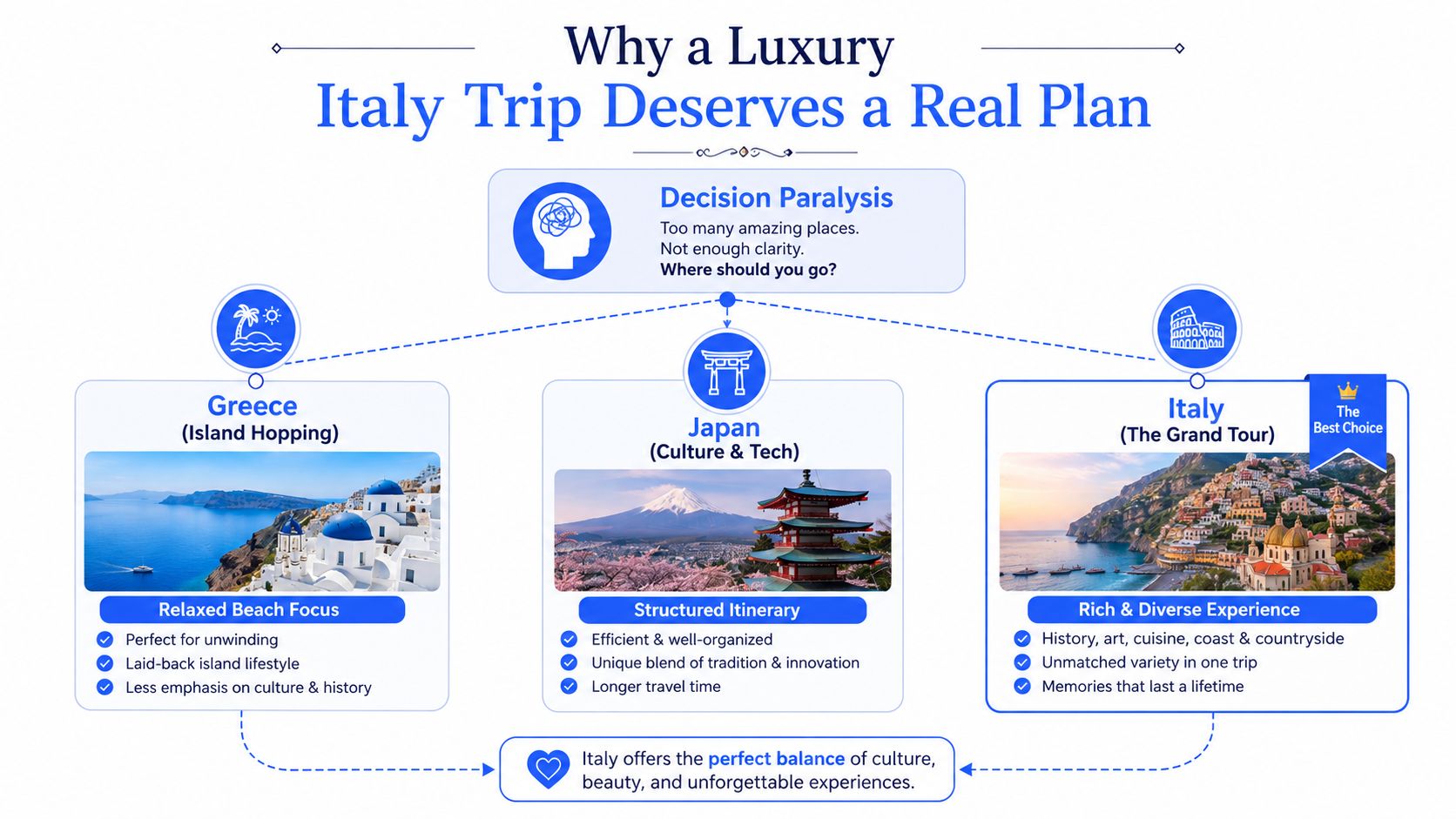
Why a Luxury Italy Trip Deserves a Real Plan
Inventory runs tight where it matters
Italy looks straightforward until you try to book it well. The best suites, the right drivers, private guides who know the difference between a polished stop and a wasted detour, and the dinner slots that matter all go first in the places luxury travelers want most. That is the point. A luxury Italy trip succeeds or fails on access, and access disappears fast when you leave planning to chance.
The market pressure is real. Analysts cited by ANSA coverage of Demoskopika's 2024 luxury tourism report show that luxury demand in Italy is growing faster than the broader hotel sector, which is exactly why the best inventory gets squeezed first. If you want the better version of the trip, you need to think like an operator and secure the pieces that cannot be improvised later.
That pressure matters more here than in many other luxury destinations because Italy is not one tidy corridor. It is a patchwork of regions, transfer styles, and access rules, and each one changes what a polished trip can look like. Rome does not run like Lake Como, Florence does not function like the Amalfi Coast, and trying to treat them the same usually creates friction.
Practical rule: build the itinerary around access first, then choose the hotels that fit the route.
The trip breaks down at three points
The first problem is inventory tightness. The second is regional fragmentation. The third is access infrastructure, which most independent travelers underestimate until the trip starts leaking time.
High-touch Italy is not just a nice room. It is the ability to connect lodging, transfers, dining, and experiences without burning half a day in the seams. That is what makes a luxury trip feel controlled instead of merely expensive.
A strong plan removes guesswork before it starts. It narrows choices, sets a sensible pace, and keeps the itinerary from becoming a collection of pretty bookings that do not work well together. If you are weighing Italy against another premium destination, the key question is which place rewards structure and timing, and Italy does. For a useful starting point, use this luxury trip planning overview.
Choosing the Right Italian Region for Your Trip Style
Match the region to the way you travel
A lot of Italy content treats every region like a wallpaper choice. That's lazy. The right luxury trip starts by matching the destination to the trip style, because Rome, Florence, Tuscany, Venice, Lake Como, the Amalfi Coast, Puglia, and the Dolomites each solve a different problem.
Rome works best as the cultural anchor or first-night city. It's the place for blockbuster history, but it needs sharper logistics than Florence, so I like it as a two to three night stop, not an open-ended base. Florence is the art-and-craft base, compact, walkable, and ideal for a three night stay if you care about museums, shopping, and easy movement.
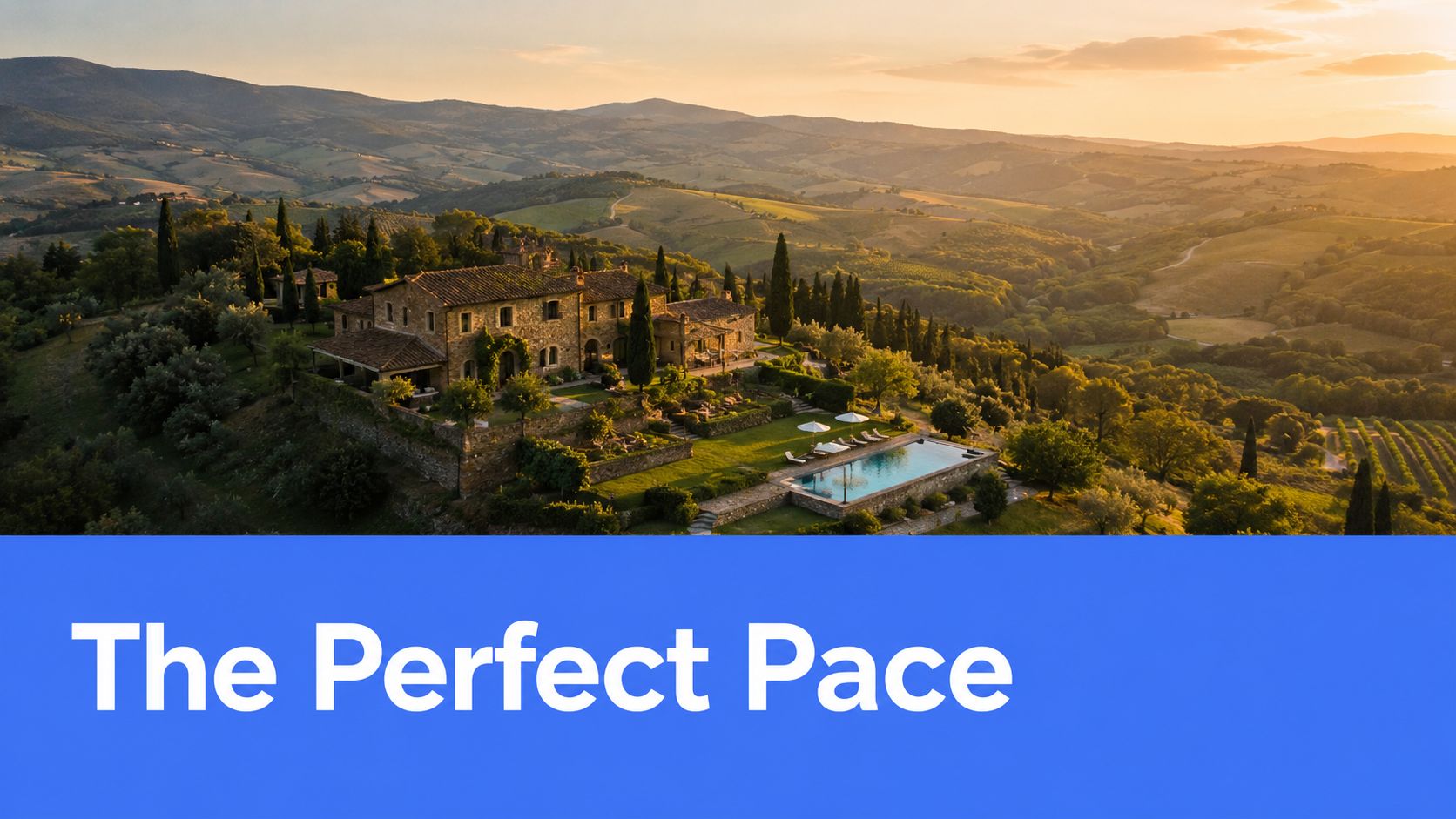
Tuscany is where you slow the whole trip down. If you want villas, vineyard lunches, and a proper countryside rhythm, this is the week-long base. For a focused planning reference, I'd point you to this towns in Tuscany guide because the town choice changes the feel of the whole stay. For the practical choices behind that countryside base, read my guide to renting villas in Italy.
The better fit depends on the purpose of the trip
The Amalfi Coast is the celebratory choice, strongest for honeymoons and milestone trips, especially when you want a single glamorous base rather than hopping around. Venice works better as a short, atmospheric stay, especially in shoulder season, because too many nights there can feel repetitive. Lake Como is the right answer for multigenerational families or couples who want a slower lakehouse-style retreat with easy water access and polished service.
Puglia is the quieter alternative for travelers who want Southern Italy without the most obvious crowds, and the Dolomites fit either active summer travel or a luxe ski escape. If you're deciding between two or three regions, keep the route tight. You'll get more pleasure from fewer, better bases.
| Region | Best For | Suggested Stay |
|---|---|---|
| Rome | Culture, history, first stop | 2 to 3 nights |
| Florence | Art, walkability, shopping | 3 nights |
| Tuscany | Villas, vineyards, slow travel | 4 to 7 nights |
| Amalfi Coast | Honeymoons, celebratory escapes | 3 to 5 nights |
| Venice | Romantic short stay, shoulder season | 2 nights |
| Lake Como | Multigenerational stays, lakeside ease | 3 to 5 nights |
| Puglia | Quieter coastal luxury, regional depth | 4 to 6 nights |
| Dolomites | Active luxe summer or ski trips | 3 to 6 nights |
For trade buyers and luxury planners who like to track how premium tastes are shifting, fine wine data for merchants can also be useful context when you're shaping a food-and-wine-heavy Italy itinerary.
A 10 to 14 Day Bespoke Italy Itinerary
Three bases usually beat five
The cleanest luxury Italy trip for most travelers uses three to four bases maximum. Any more than that and you start spending too much of your best energy on check-outs, transfers, and unpacking. A strong itinerary has a rhythm. You arrive, settle, slow down, and then move.
For first-time visitors, the classic route is Rome, Florence, and the Amalfi Coast. That combination works because each place plays a different role. Rome gives you the history-heavy arrival, Florence gives you culture and walkability, and Amalfi gives you the reward phase where the pace softens and the views do the work.
My rule of thumb: if a stop can't justify at least one slow morning, it probably doesn't deserve a night.
Pacing matters more than packing in sights
A second route suits repeat travelers better, Tuscany, Venice, and Lake Como. That version is less about checking Italy off and more about living in it well. Tuscany gives you the countryside, Venice adds a compact burst of romance and spectacle, and Lake Como closes the trip with a slower, more residential feel.
Structure matters. Florence deserves at least three nights because the city works best when you're not rushing between sights. Amalfi is better as a single-base villa stay than as a string of hotel swaps. Venice is strongest as a two-night punctuation mark, not a week-long command center. If you want to weave Italy with Switzerland, use this Italy and Switzerland trip planning page as your framework, because that pairing needs even tighter transfer discipline.
Keep the transfer days intentional
Private transfers between cities are worth it when they protect the tone of the trip. That's especially true on routes with luggage, coastal roads, or multi-stop days. If you're building a self-drive segment, this car rental deals in Rome reference is useful as a baseline, but I'd still be selective. Driving in Italy can be excellent in the countryside and tedious in dense city centers.
The point is to build breathing room into the itinerary, not to fill every hour. Luxury Italy works best when it feels composed, not overworked.
What Real Luxury Buys in Italy Beyond a Five-Star Room
Access is what separates a good stay from a great one
The biggest mistake affluent travelers make is assuming the room category is the whole story. It isn't. In Italy, luxury is access infrastructure. It means getting into places and situations that the average premium traveler cannot reliably arrange alone.
The first tier is private cultural access, which can mean after-hours museum openings or special visits that avoid public congestion. The second is producer relationships, like tastings at family estates or guided sessions with makers who do not treat guests like a conveyor belt. The third is artisan access, such as Murano glass furnaces, Florentine leather ateliers, or Sorrento inlay studios arranged through introductions.
Timing changes the quality of the experience
The fourth tier is the right hour. A private boat at sunrise feels entirely different from the same water experience at noon. A vineyard dinner after day-trippers leave does too. A good advisor earns their keep here, because the value is not in sending you somewhere beautiful. It is in choreographing the hours so you arrive when the place feels generous.
Recent specialist coverage highlights exactly these kinds of high-touch advantages, from pre-opening museum access to private tastings and artisan visits arranged through introductions. That is the part most standard articles skip, even though it is what clients remember most. Quinta Italy's overview of luxury travel experiences in Italy fits neatly into that access-first mindset.
Good luxury travel in Italy feels quiet, not busy. If the day keeps handing you lines, crowds, and rushed timing, you paid for polish, not privilege.
The hotel still matters, of course. The property is the stage. Access delivers the experience.
Budget Ranges and What Each Tier Includes
Think in benchmarks, not just room rates
I don't like vague budget advice, so I would frame a luxury Italy trip in three planning tiers. A comfortable entry point covers a strong hotel, private transfers where they matter, a few standout meals, and one or two high-value experiences. A flagship honeymoon build adds better suites, more private touring, higher-end dining, and a more careful pace. An ultra-high-end bespoke trip layers in villa staffing, private boats, helicopter or premium car transfers where appropriate, and a much more personalized level of access.
The question is what scales. Private boats, villa staff, and helicopter transfers can move the total sharply. Some hotel rates, especially in shoulder season, stay steadier than people expect, but the biggest jumps usually come from experience design and logistics, not just the room category.
Spend where the trip feels better
Put money where it removes friction. That usually means the best room category you can sensibly justify, private transfers on the complicated legs, and a short list of experiences that are difficult to repeat anywhere else. I would rather see a couple skip a fourth hotel change and put that budget into a better guide, a private boat, or a dinner with real atmosphere.
Altagamma's reporting gives a useful reminder of where value lands in Italy. It says international high-end tourists spend about €25 billion directly in Italy, including roughly €7 billion on accommodation and €2 billion on eating out, with total direct-plus-indirect contribution rising to around €60 billion for the Italian economy. Altagamma's high-end tourism report
That is why I do not sell Italy as “book the nicest hotel and you are set.” I build the trip around the parts that are hardest to replace later, the guide who gets you in, the boat that changes the day, and the timing that keeps the whole itinerary calm.
When to Travel and How to Avoid the Peak-Season Bottleneck
Shoulder season is the smartest default
If you want the cleanest answer, plan for April to May or September to October. Those windows usually give you a better balance of weather, availability, and crowd levels than peak summer, and that balance matters in Italy. Peak season is where pricing climbs, availability tightens, and the best tables and rooms become much harder to secure at the last minute.
The trade-off is real. Shoulder season can bring weather variability, and smaller museums or coastal operators sometimes run reduced hours outside the busiest months. Ferry schedules can also be thinner off-season, which changes how practical some coastal routes are. Even so, for most luxury travelers, shoulder season is the strongest mix of comfort and control. As noted in the ANSA coverage of Demoskopika's 2025 forecast, luxury tourism remains a major and growing part of the market, which is exactly why timing matters so much. ANSA coverage of Demoskopika's 2025 luxury tourism forecast
Staggering regions is the cleanest workaround
The smartest way to keep the trip polished without fighting the country at full volume is to stagger regions. Use Tuscany in early summer, the Amalfi Coast later in September, and Venice in early November if your priorities are atmosphere and fewer people, not beach weather. Puglia, Umbria, and the Dolomites also work well as strategic bases when you want strong quality without the same congestion as the marquee cities.
That approach keeps the trip feeling composed instead of rushed. You are not chasing the same climate everywhere. You are choosing the right version of each place at the right time.
Planning Your Trip With an Advisor and What Comes Next
The three decisions that shape the whole trip
Most Italy trips are won or lost on three choices, which regions, which timing, and which access tier. Get those right and everything else becomes easier. Get them wrong and you end up overpaying for a trip that still feels crowded and overmanaged.
The actual planning process should be simple. It starts with a virtual consultation, then a draft itinerary, then refinements, then full booking and logistics coordination before departure. Trusted in-destination partners and suppliers handle the on-the-ground support, while I coordinate the moving parts ahead of time. If you want a useful reference on how high-level support can reduce friction on a private trip, this hire a personal assistant guide explains the value of delegated logistics well.
Make the first step easy
If Italy is on your list for 2026, stop treating it like a self-service project. Decide whether you want a classic first-time route, a slower countryside build, or a more access-heavy milestone trip, then work from there. Check current government travel advisories and local guidance before you go, because conditions can change anywhere, and situational awareness matters on every trip.
Hi, I'm Karrah, owner, founder, and lead travel advisor at Explore Effortlessly, a luxury award winning travel agency based in Miami. I specialize in designing bespoke, high touch itineraries to bucket list destinations around the world, and I work with clients nationwide through virtual consultations. Every trip is curated with intention, insight, and meticulous logistics from start to finish, so you can enjoy the journey instead of managing it.
Explore Effortlessly can help you design an Italy trip that's paced well, timed properly, and built around the experiences that matter most. If you want a trip that feels effortless from the first transfer to the final dinner reservation, reach out and let's start shaping it. Join the newsletter for more destination ideas and planning insight at Explore Effortlessly updates.