You're probably here because the resort option feels too predictable, the group text is full of opinions, and you want one trip that feels private, polished, and worth the investment. A private yacht charter in the Caribbean can absolutely deliver that. It can also become a surprisingly clunky experience if the wrong yacht, crew, route, or cost structure gets locked in too fast. If privacy matters less than a yacht-style atmosphere, compare the Orient Express yacht experience before committing to a private charter.
The difference between a merely expensive trip and a perfectly arranged one usually comes down to decisions most travelers never see. Not just which island. Which embarkation point makes flight timing easier. Not just which yacht looks beautiful in photos. Which crew matches your pace, food preferences, and service expectations. Not just what the weekly rate is. What your total onboard spend will look like once fuel, provisioning, and gratuities are handled properly.
The Ultimate Escape Awaits
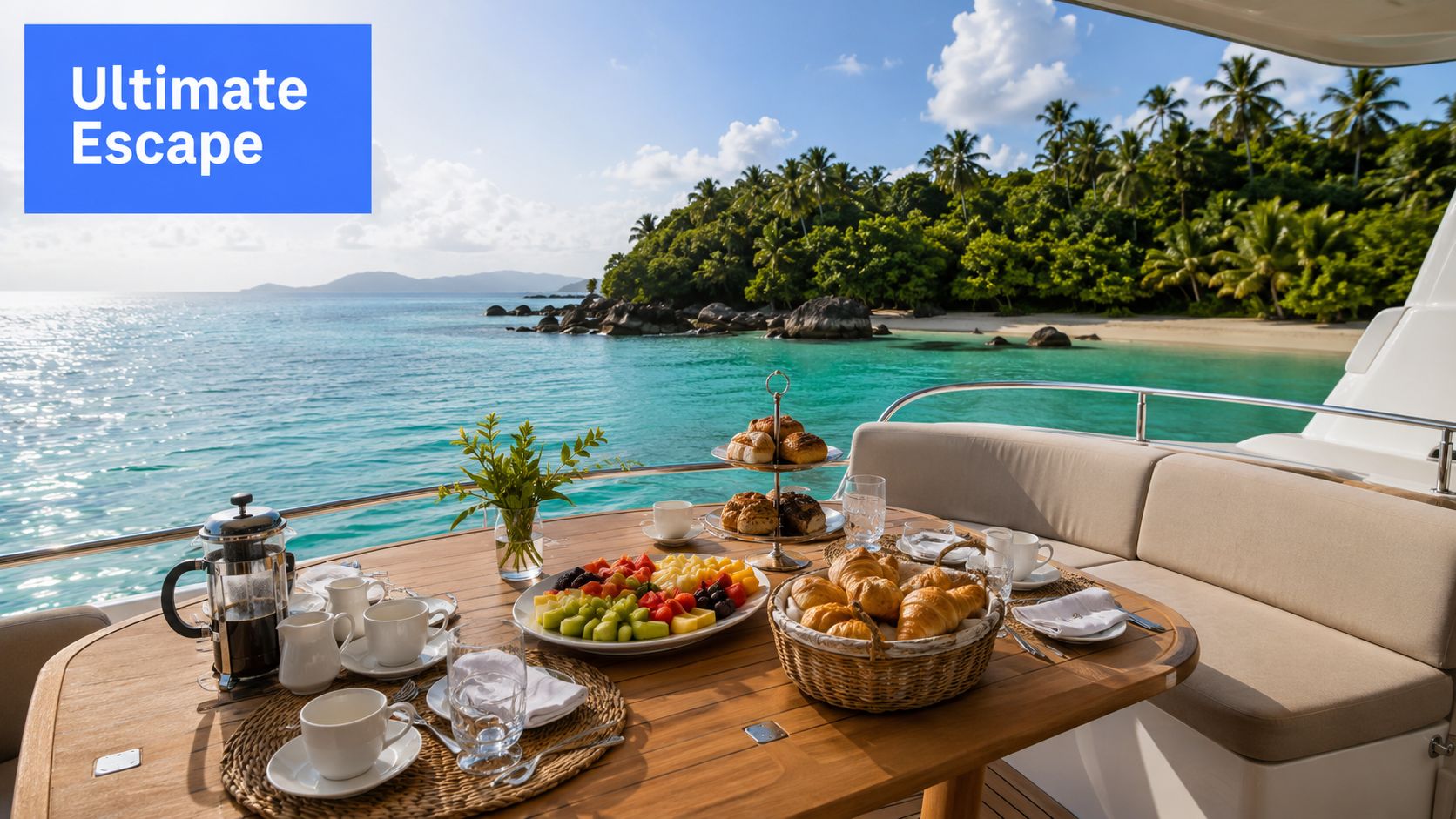
A great charter morning feels almost absurdly easy. You wake up to still water, coffee appears without you asking, and breakfast is set on deck while the captain adjusts the day around weather and mood. Maybe you snorkel before lunch. Maybe you stay put because the anchorage is perfect. Maybe you move after lunch and arrive somewhere that feels inaccessible to everyone else.
That freedom is the reason private charters keep such a strong hold on the luxury market. The private and leisure segment accounts for 77.88% of the global yacht charter market in 2025, according to Mordor Intelligence's yacht charter market report. That tells you something important. This isn't a niche corporate product pretending to be leisure. It is a high-end vacation built around privacy, choice, and personal space.
The fantasy is easy to sell. The logistics are where the trip gets won or lost. I'm talking about things like whether your yacht's draft fits the anchorages you want, whether your crew leans formal or relaxed, and whether your route gives you enough movement to feel exciting without turning the week into a floating transfer schedule.
Practical rule: The best private yacht charter Caribbean experience is never built around the yacht alone. It's built around the rhythm you want onboard.
If you're still deciding where your style fits best, browsing these Caribbean islands to visit is a useful starting point. The right island set shapes the entire charter personality.
Choosing Your Perfect Caribbean Vessel
The yacht is your hotel, your transport, your dining room, and your front-row seat to the sea. Choosing the wrong type affects everything.
Motor yacht, sailing yacht, or catamaran
A motor yacht is the right answer if you want range, speed, and a more polished, estate-on-water feel. You cover more distance with less patience required. That matters if your ideal trip includes chic beach clubs one day, a remote anchorage the next, and very little tolerance for long passages in between.
A sailing yacht is for travelers who care about the act of being at sea. It's quieter, more traditional, and often more romantic. If your idea of luxury includes wind-powered movement, longer lunches at anchor, and less urgency, sailing has a certain magic that motor yachts can't copy.
A catamaran is often the smartest first charter choice. It's stable, spacious, and easier for many guests to enjoy, especially if anyone in your group is unsure about life on the water. Its shallow draft also opens up bays and beaches that larger vessels may not access as easily.
Match the vessel to the trip, not your ego
Here's the decision framework I use.
- For families or first-time charterers: Choose a catamaran. The layout is easier, the movement is gentler, and the indoor-outdoor flow works beautifully.
- For clients who want glamorous movement: Choose a motor yacht. You'll spend less time getting there and more time arriving well.
- For honeymooners or purists: Choose a sailing yacht if the romance of the journey matters as much as the destination.
Award photos don't tell you how a crew handles children, dietary complexity, or a guest who wants service that's attentive but not performative.
A quick comparison that actually helps
| Yacht type | Best for | Tradeoff |
|---|---|---|
| Motor yacht | Fast island hopping, high-touch amenities, larger social spaces | Higher operating complexity and a more formal feel on some vessels |
| Sailing yacht | Romance, classic seafaring, slower pace | Less ideal if your group wants to cover a lot of ground quickly |
| Catamaran | Stability, space, easy living, shallower anchorages | Usually less dramatic in style than a sleek motor yacht |
The right choice should feel obvious once you're honest about how you travel. If you hate rushing on land, you'll hate an overpacked charter itinerary at sea too.
Decoding the Cost of a Private Yacht Charter
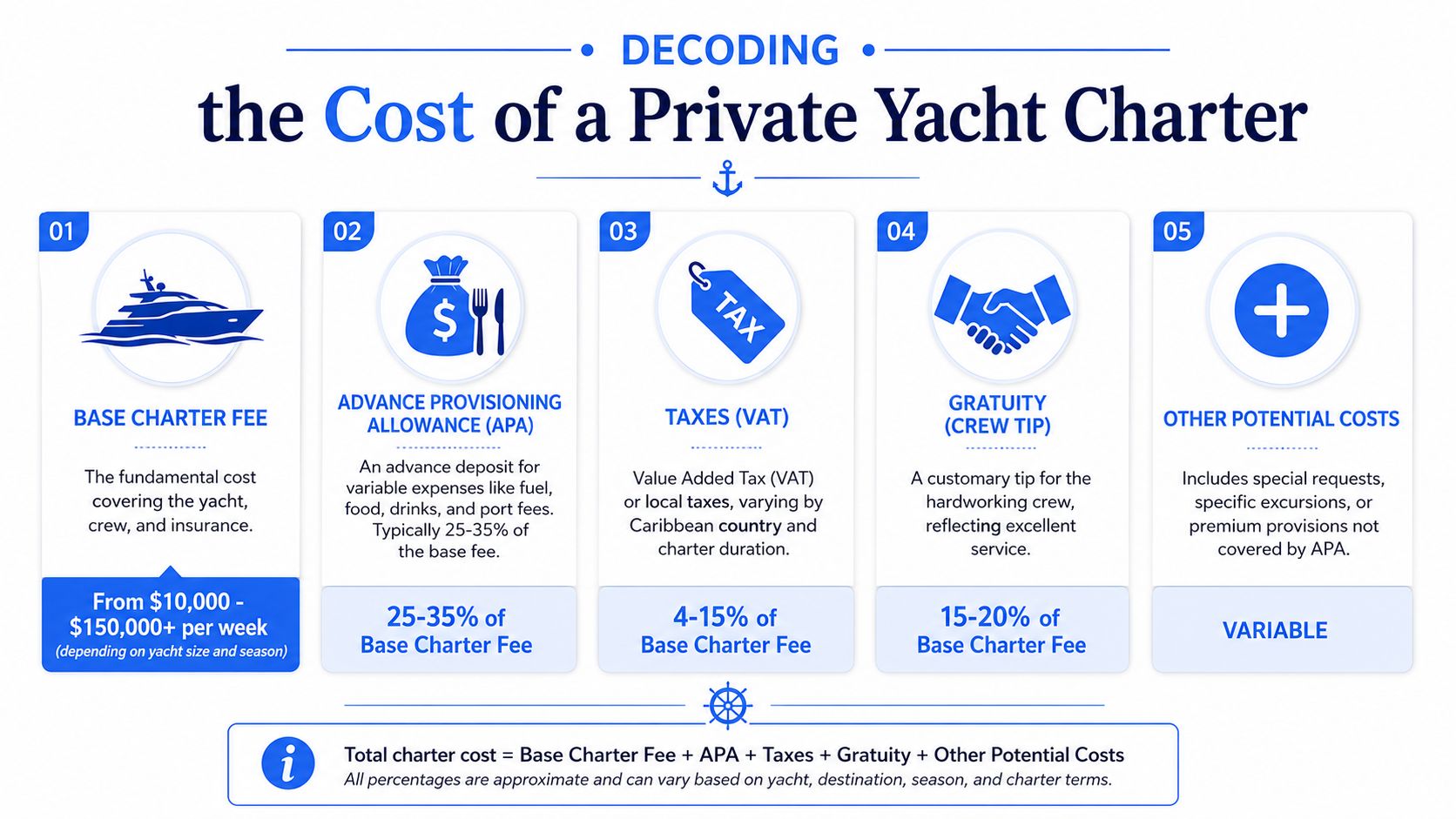
A charter can look straightforward on paper. Then the first APA statement arrives, the group requests rare tequila and last-minute marina berths, and the budget shifts fast. Clients who enjoy their yacht week most are usually the ones who understand the cost structure before they choose the yacht.
The weekly rate only sets the frame
The base charter fee buys access to the yacht and crew. Your real spend depends on the operating style of that vessel, the standards of food and drink you expect, and how aggressively you want to move around the islands.
For a grounded benchmark, N&J's guide to yacht charter costs breaks pricing into practical bands by yacht type and size, from smaller crewed yachts to large superyachts. That range matters because cost is not really about feet or glossy photos. It is about the experience you are purchasing: privacy level, crew depth, pace of travel, toy inventory, and how personalized you want each day to be.
If your group also cares about easy swim stops and shore time, these Caribbean islands with the best beaches help narrow where the money is best spent.
APA is the line item that separates casual booking from smart booking
The Advance Provisioning Allowance, or APA, covers variable expenses during the charter, typically things like fuel, food and beverages, dockage, and local charges. Worldwide Boat's Caribbean charter guide explains how these running costs are handled on plus-expenses charters.
Here is the practical point. APA is not a nuisance fee. It is a live operating budget, and your decisions shape it every day.
A few examples make that clear:
- Longer cruising legs increase fuel use.
- Premium wine programs and specific brand requests raise provisioning costs.
- Marina nights usually cost more than quiet anchorage nights.
- Water toys, tenders, and guest transfers can affect fuel and logistics.
This is why an expert advisor builds the itinerary and budget together. A yacht that looks attractively priced can become poor value if the route, guest expectations, and onboard habits are mismatched from the start.
All-inclusive and plus-expenses serve different clients
Some crewed catamarans and smaller yachts use an all-inclusive format. That works well for families, first-time charterers, and groups who want cleaner budgeting. You trade some customization for easier cost control.
Larger luxury yachts often run on a plus-expenses structure. That gives you more freedom, more provisioning precision, and often a broader set of yacht options, but it also requires tighter planning. If you want obscure vintages, complex dietary execution, multiple marina reservations, and lots of movement, plus-expenses is usually the right fit.
Choose the accounting model based on how you travel, not on what sounds more luxurious.
The best charter value comes from aligning the yacht, crew style, itinerary pace, and spend tolerance before contracts are signed.
Gratuity should be budgeted from day one
Crew gratuity is customary in the Caribbean and should sit in your budget from the beginning. Handle it that way and the final day feels generous and polished, not financially awkward.
That last detail matters more than people expect. Luxury is not just what you book. It is how well the week is run, right down to the final envelope.
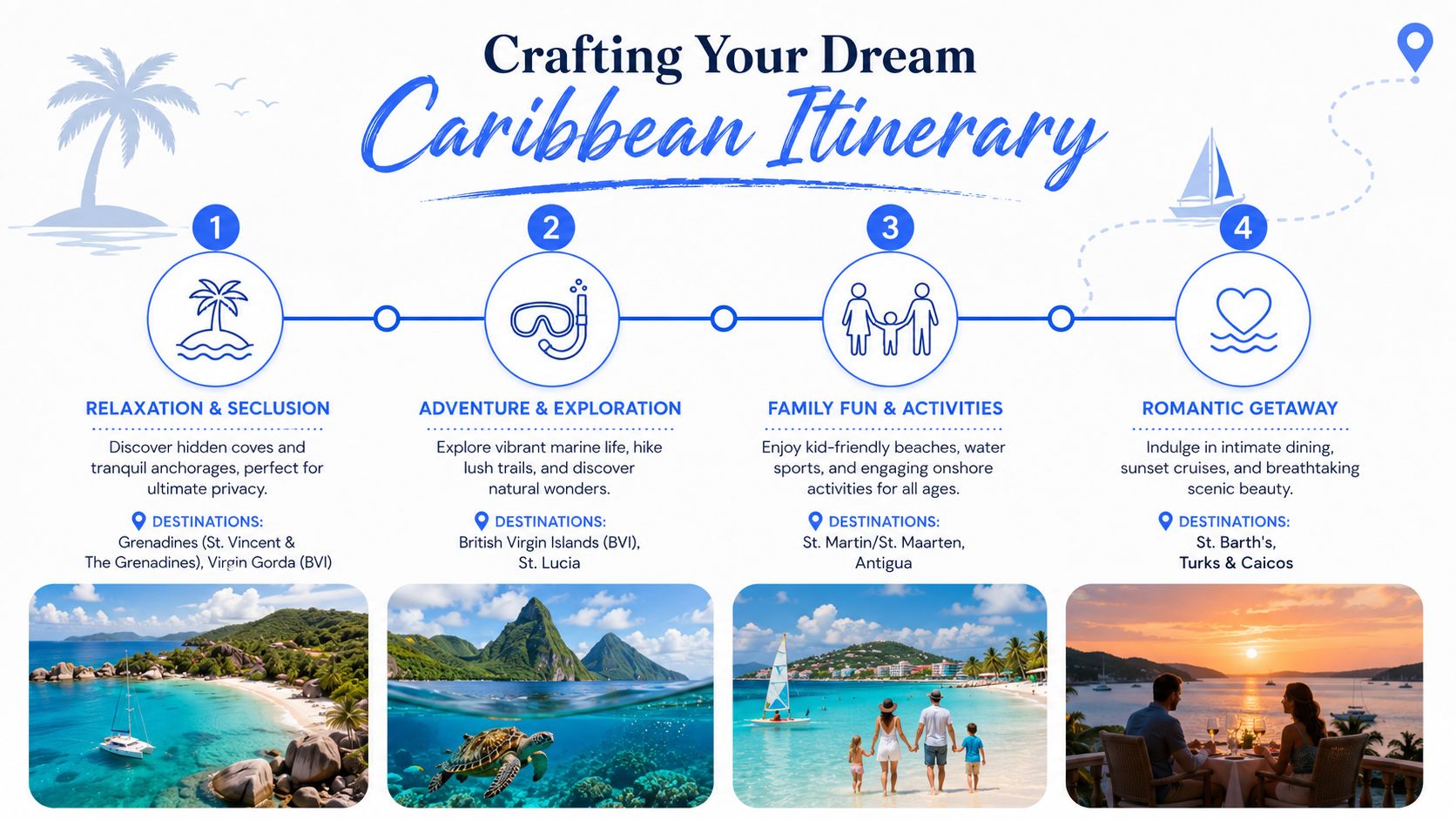
Crafting Your Dream Caribbean Itinerary
The best itinerary isn't the one with the most islands. It's the one with the right energy.
For easy island hopping and low-friction days
The British Virgin Islands work beautifully for travelers who want a relaxed, classic charter week. The sailing distances are manageable, the rhythm feels easy, and the experience tends to suit families, celebratory friend groups, and first-time charterers especially well.
A typical flow might include a beach morning, a lunch stop with calm water for paddleboarding, and an afternoon move to a protected anchorage. That kind of route gives you variety without making every day feel operational.
If your group cares about beach quality as much as onboard luxury, these Caribbean islands with the best beaches can help narrow the best fit.
For polished glamour and a stronger social scene
St. Martin and St. Barts suit travelers who want their charter to feel refined both on and off the yacht. Expect designer swimwear, elegant lunches ashore, and a more cosmopolitan tone. It works well for couples, milestone birthdays, and clients who want to balance privacy with some scene.
One reason this route works is contrast. You can spend one day anchored somewhere quiet and the next stepping ashore for a more dressed-up dinner. The yacht becomes your private retreat, not your only environment.
For romance and quieter beauty
The Grenadines lean softer, slower, and more intimate. This is the route I'd look at for honeymooners, repeat Caribbean travelers, or anyone tired of performative luxury. The beauty here feels less staged.
A good charter in this part of the Caribbean leaves breathing room. One unhurried swim stop. One beautiful sunset with no need to “go somewhere better.” One dinner onboard that ends up being the favorite night of the trip.
A private yacht itinerary should protect your mood, not just fill your map.
What actually shapes a strong route
The strongest itineraries usually balance these factors:
- Flight practicality: Easier arrivals reduce stress before you even step onboard.
- Cruising tempo: Too much movement drains the week.
- Shore access: Some clients want beach clubs and boutiques. Others want almost none.
- Weather flexibility: A good route leaves room for adjustment without losing its charm.
That's why itinerary design is less about listing islands and more about sequencing experience.
Navigating Seasons Packing and Etiquette
You feel the difference before the first sunset. The right week, the right bags, and the right expectations with crew turn a charter from expensive to effortless. Get those details wrong, and you spend a premium to deal with avoidable friction.
Timing your week well
Choose your dates based on the experience you want, not just the headline season. Holiday weeks bring the highest rates, tighter yacht availability, busier anchorages, and more pressure on flights and marinas. Late spring and early summer often give clients a better balance of weather, value, and breathing room ashore.
The best timing also depends on your route. Trade winds, local events, and sea conditions shape whether a week feels relaxed or overworked. If you want a useful regional benchmark, this guide to the best time to visit Turks and Caicos gives a clear read on Caribbean seasonality.
A good advisor does more than pick a month. They match your tolerance for heat, motion, crowds, and transfer complexity to the right charter window.
Pack for the yacht you're actually on
Overpacking is one of the fastest ways to make a yacht feel smaller.
Bring soft-sided luggage that folds flat once unpacked. Hard cases are awkward in compact cabins and end up in the crew's way. Pack clean deck shoes or refined flat sandals, light resort wear that layers easily, proper sun protection, and one smart evening look for dinner ashore or a polished meal onboard.
What you leave out matters too. Bulky formalwear, too many shoes, and high heels rarely earn their space. If you want a practical last-minute check, these Alivate beach packing tips are useful.
The smartest packing choice is strategic, not stylish. Bring pieces that work from tender rides to lunch to sunset drinks without requiring a costume change every few hours.
Onboard etiquette that makes the week smoother
Good charter etiquette starts with clarity. Tell the crew what you like early. Food dislikes, wake-up routines, children's habits, preferred service style, even whether you want conversation or quiet all help the crew calibrate the week properly.
This also affects money. The APA only works well when guests understand what belongs inside it and what does not. Special wines, heavy fuel burn, dockage, and premium shore requests can move that running total faster than clients expect, so review spending preferences with the captain at the start instead of asking for a surprise-free bill at the end.
Crew gratuity should also be planned in advance. The Mediterranean Yacht Brokers Association outlines standard charter practice and notes a customary gratuity range of 5 to 15 percent of the charter fee, given at the client's discretion, in its MYBA charter FAQ. In the Caribbean, many clients choose to tip at the higher end when service has been excellent.
Respect privacy, communicate directly, and let the crew do their job. That is how a luxury charter runs well without feeling stiff.
Your Booking Timeline and Checklist
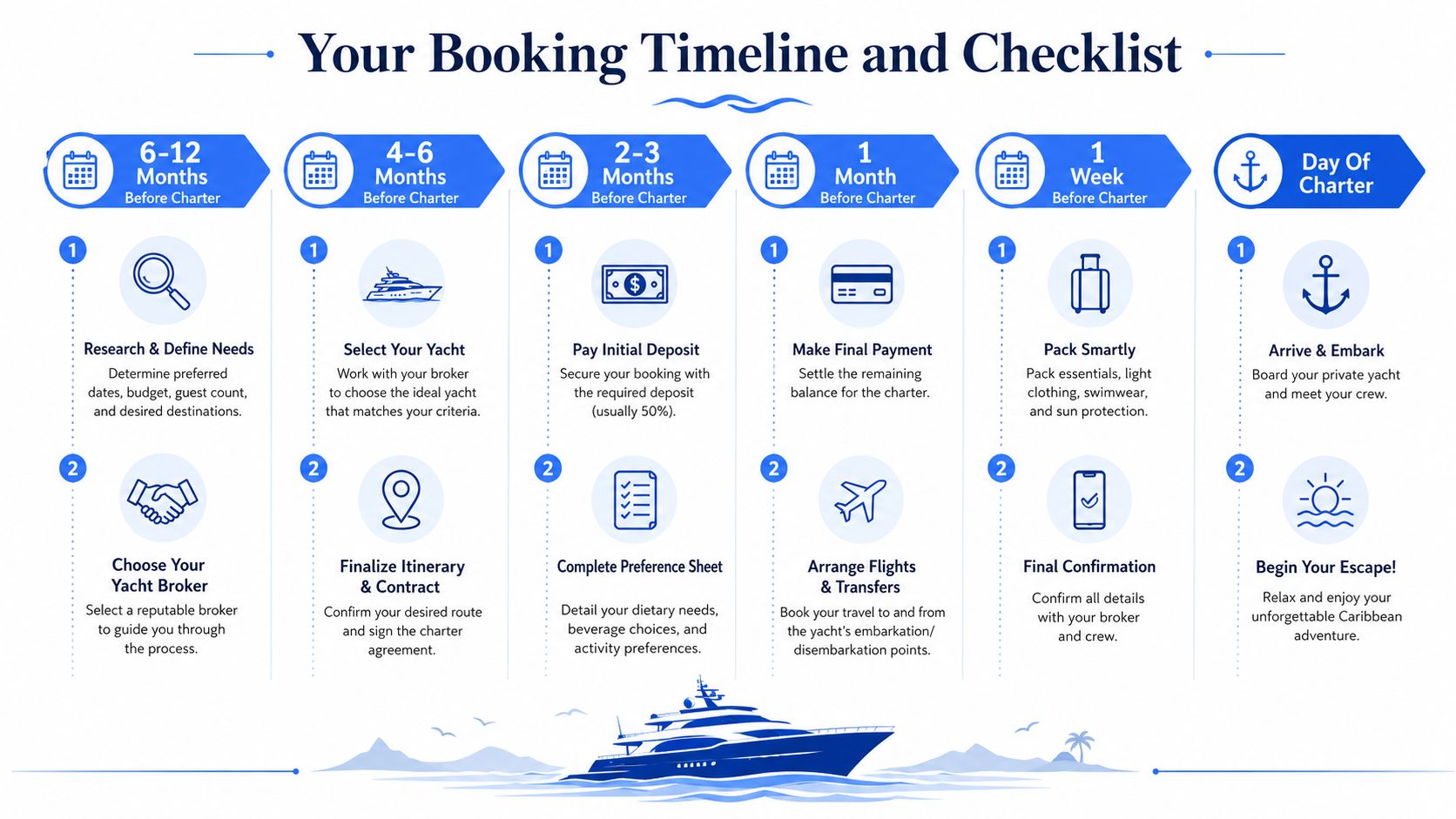
The best yachts don't wait around while you “think about it.” If your travel dates matter, especially around the holidays, move early.
Start earlier than you think
For a high-demand charter week, I recommend beginning the conversation well in advance. Christmas and New Year's are the obvious pressure points, but top crews and standout yachts can disappear early for other prime dates too.
A clean planning sequence usually looks like this:
Define the trip
Guest count, trip style, preferred islands, and spending comfort need to be clear first. Not perfect, just clear enough to filter correctly.Review yacht options
Layout, crew fit, water toys, dining style, and route compatibility are compared. Photos matter less than charter suitability.Lock the contract
Charter agreements are detailed for a reason. This step deserves attention, especially around payment schedule, cancellation terms, and expense structure.
The preference sheet is more important than people think
Several weeks before departure, you'll usually complete a detailed preference sheet. On this sheet, a generic trip becomes personal. Favorite wines, children's snack habits, spa preferences, allergies, activity intensity, sleeping arrangements, coffee expectations. It all belongs here.
The families and couples who have the best charters usually take this step seriously. They don't answer with “anything is fine.” That answer helps no one.
Final prep should feel calm, not frantic
Closer to departure, the work shifts from selection to coordination.
- Payments: Final balance and onboard funding are handled before travel.
- Flights and transfers: Arrival timing should support embarkation, not create anxiety.
- Wardrobe and documents: Keep this simple and yacht-appropriate.
- Last checks: Confirm dietary notes, celebration plans, and embarkation details.
If the planning process feels chaotic, something upstream wasn't organized properly.
Why a Yacht Charter Specialist Is Essential
You can spend six figures on a Caribbean yacht charter and still end up with the wrong crew dynamic, a weak chef, awkward cabin assignments, and an APA that drifts well past what you expected. The yacht was beautiful. The trip was still misbuilt.
That is why a specialist matters.
A strong charter advisor is not there to admire brochure photos. The job is to pressure-test the yacht, the crew, the contract, and the spending structure before you wire funds. Luxury on paper means very little if the captain dislikes ambitious island hopping, the chef cannot handle your family's dietary needs, or the chief stewardess runs formal service when your group wants a relaxed house-party feel.
The hidden work is where the value sits. A specialist compares crew reputation between brokers, flags yachts that show well but underdeliver, and filters options based on how you live, not just how the vessel looks. That is how you avoid paying for the wrong kind of luxury.
What a specialist catches before you board
The best advisors are making judgment calls long before embarkation day.
- Crew chemistry: Technical competence is only the baseline. The right crew for a honeymoon is often wrong for a multigenerational family week.
- Service style: Some yachts excel at polished, formal service. Others are better for barefoot lunches, toy-heavy afternoons, and flexible meal times.
- Operational fit: A yacht may be gorgeous and still be the wrong choice for your route, guest count, or activity level.
- APA management: You need clear guidance on provisioning, fuel assumptions, bar expectations, and where spending can drift.
- Contract protection: Charter terms need review with your interests in mind, especially around cancellation, delivery terms, and what happens if the yacht becomes unavailable.
This is what separates a costly holiday from one that feels easy, polished, and well judged.
Busy clients benefit even more because time is the scarce asset, not just money. If you have one school break, one major anniversary window, or one week when everyone can travel, there is very little room for trial and error. A specialist shortens the decision tree fast and rejects weak-fit yachts early.
Good advisors also handle the pieces around the yacht that guests remember the moment they go wrong. Marina access. Arrival timing. Baggage volume. Provisioning priorities. Whether your children need a patient, playful crew or whether your group needs a captain who protects quiet mornings and low-visibility anchorages. Those details rarely appear in a listing. They shape the whole trip.
About the author
Hi, I'm Karrah, owner, founder, and lead travel advisor at Explore Effortlessly, a luxury award winning travel agency based in Miami.
I specialize in designing bespoke, high touch itineraries to bucket list destinations around the world. Every trip is curated with intention, insight, and smooth logistics from start to finish.
From luxury cruises and private villas to honeymoons, safaris, and once in a lifetime journeys, my role is to simplify the planning process while improving every detail.
I'm a Circle of Excellence Advisor. Top 5 percent at Nexion and a CLIA Accredited Cruise Counselor.
Frequently Asked Questions About Caribbean Yacht Charters
What kind of insurance should I have for a yacht charter
The yacht itself carries commercial coverage, but you should still have extensive travel insurance for your trip. Charter agreements tend to be strict, and cancellation, interruption, and medical coverage matter when you're making this level of investment. I treat travel protection as part of the planning conversation, not an optional add-on.
Can the food and activities be customized
Yes, and they should be. The preference sheet is where your chef and crew learn how you wish to travel. If you want green juice every morning, a child-friendly dinner one night, and a more refined tasting-style meal another night, that's the kind of detail that belongs there.
What happens if the weather changes
The captain adjusts. Good captains monitor conditions constantly and shift the route to protect comfort and vessel safety while still preserving the feel of the trip. This is one of the biggest advantages of a private charter. You have flexibility built in.
Is an all-inclusive yacht always the better choice
Not always. It's the better choice if you want budgeting clarity and less financial tracking during the trip. A plus-expenses charter can be the stronger fit if you want a wider range of yacht options and more control over provisioning and onboard lifestyle.
Is a private yacht charter a good fit for families
Often, yes. Families do especially well when the yacht layout is practical, the crew likes children, and the route includes easy swim stops and short cruising times. The planning matters more than the concept.
How is safety handled on a crewed charter
Commercially operated yachts follow safety standards and carry professional equipment, but I never suggest treating any destination or travel style as risk free. Conditions can change. Travelers should stay aware of their surroundings, review official travel advisories, and work with vetted operators and local partners as part of a higher service standard.
If you want a Caribbean yacht trip that feels polished from the first flight to the final tender dock, Plan my luxury trip with Explore Effortlessly. I design and manage these experiences for busy professionals, couples, and families who want one expert handling the moving parts. Join the newsletter for more luxury travel guidance and inspiration through Explore Effortlessly's newsletter.