You land in Madrid on a Friday morning, check into a well-placed hotel, and have exactly two days to get the city right. The difference between a forgettable weekend and a polished one comes down to one decision. Stop trying to see all of Madrid, and choose your version of it.
Madrid suits a short luxury stay because the center is easy to handle on foot, major districts connect well, and the city gives you distinct experiences within a tight radius. You can spend one trip moving between world-class museums and stately boulevards, and another focused on long lunches, late dinners, and neighborhood rhythm. Both work. The wrong move is forcing yourself into a generic 48-hour checklist.
That is why this guide is built around curated personas, not a rigid itinerary. Choose the track that fits how you travel. The Art Connoisseur. The Foodie. The Wellness Seeker. The Design Aficionado. The history lover, the neighborhood explorer, or the couple planning a romantic city break. Madrid rewards clarity.
Key takeaways
- Choose your Madrid persona first: Art, food, wellness, history, design, neighborhoods, or romance.
- Book headline experiences early: Royal Palace tickets, sought-after restaurants, private guides, and spa appointments go fast.
- Stay central: Salamanca, Jerónimos, Las Letras, and parts of Chamberí save time and improve the entire trip.
- Use evenings deliberately: Madrid starts late. A smart dinner time and car plan make the city far more enjoyable.
- Go in shoulder season if possible: Spring and autumn bring better pacing, easier reservations, and a more pleasant city for walking.
If you already know you prefer short European escapes planned around style, pacing, and access, my guide to a curated two days in Venice shows the same approach in a very different city.
1. The Classic Art & Culture Deep Dive
You land in Madrid on a Friday, check into a hotel in Jerónimos or Las Letras, and have 48 hours to do the city properly. If art is your reason for coming, commit to the Art Connoisseur version of Madrid and let everything else support it.
Start with the Prado. It is the right first choice for anyone who wants the clearest introduction to Spanish painting and royal patronage. Do not try to “cover” the museum. You will remember far more if you build the visit around one thread: Velázquez and court image-making, Goya at his most unsettling, or the evolution of Spanish religious painting.
Book the earliest entry you can get, ideally with a specialist guide. The first hour is quieter, the lighting feels gentler, and your attention is sharper. That matters in Madrid, because two serious museum sessions in two days can be exhilarating, but they are also mentally draining.
Day 1 works best with the Prado in the morning, a long lunch nearby, then a restrained afternoon. The Thyssen-Bornemisza is the smart second stop if you want range and contrast. Skip it if your energy is fading. A polished dinner in Salamanca or near Retiro will serve you better than forcing in another institution just to say you did it.
Day 2 should shift tone. Head to the Reina Sofía if modern and political art matters to you, especially if Picasso and the Spanish avant-garde are part of why you booked Madrid in the first place. If they are not, avoid museum fatigue and spend the morning in Chueca or Malasaña, where smaller galleries, bookshops, and design-forward spaces give the city a more current cultural identity.
This persona suits travelers who prefer curation over volume. It is the same philosophy I recommend for other short European city stays, including this curated approach to two days in Venice.
A few logistics make a noticeable difference. Tuesday through Thursday usually feels calmer than a weekend-heavy schedule. Summer afternoons are hot and draining, so front-load your museum time and keep the late afternoon for a hotel reset or a shaded terrace. In winter, Madrid is excellent for art trips because the city is easier to move through and indoor cultural time feels natural rather than like a compromise.
For clients who like to pair visual culture with one strong culinary reservation, I often add a serious lunch or dinner after the main museum session, much like I would for travelers planning around Michelin-starred dining in Lima. If you want to thread in wine without turning this into a food-first itinerary, a concise tasting focused on Rioja or Ribera del Duero is enough. Discovering Spain's wine regions is a useful primer before you arrive.
Choose a hotel near the Golden Triangle of Art and you will save time, reduce transfers, and keep the trip feeling calm and well-paced. For this Madrid persona, proximity is not a luxury perk. It is good planning.
2. The Culinary & Wine Connoisseur's Journey
The best food-driven Madrid trips start with a decision. Are you chasing atmosphere, technique, wine, or access? Once you know that, the city becomes very easy to shape.
A business traveler with one free evening might want a sharp, highly choreographed tasting menu followed by a late vermouth. An anniversary couple might prefer a market visit, a private tasting, then an exceptionally intimate dinner with a sommelier-led progression. Both are “food trips,” but they aren't the same trip.
Build around one anchor experience
Luxury travelers now choose experiences first and destination second, which is exactly how I recommend planning a culinary Madrid stay (experience-led luxury travel approach). In practical terms, that means you don't start with “What should we see?” You start with “What do we want to taste, learn, and feel?”
A polished food itinerary might include:
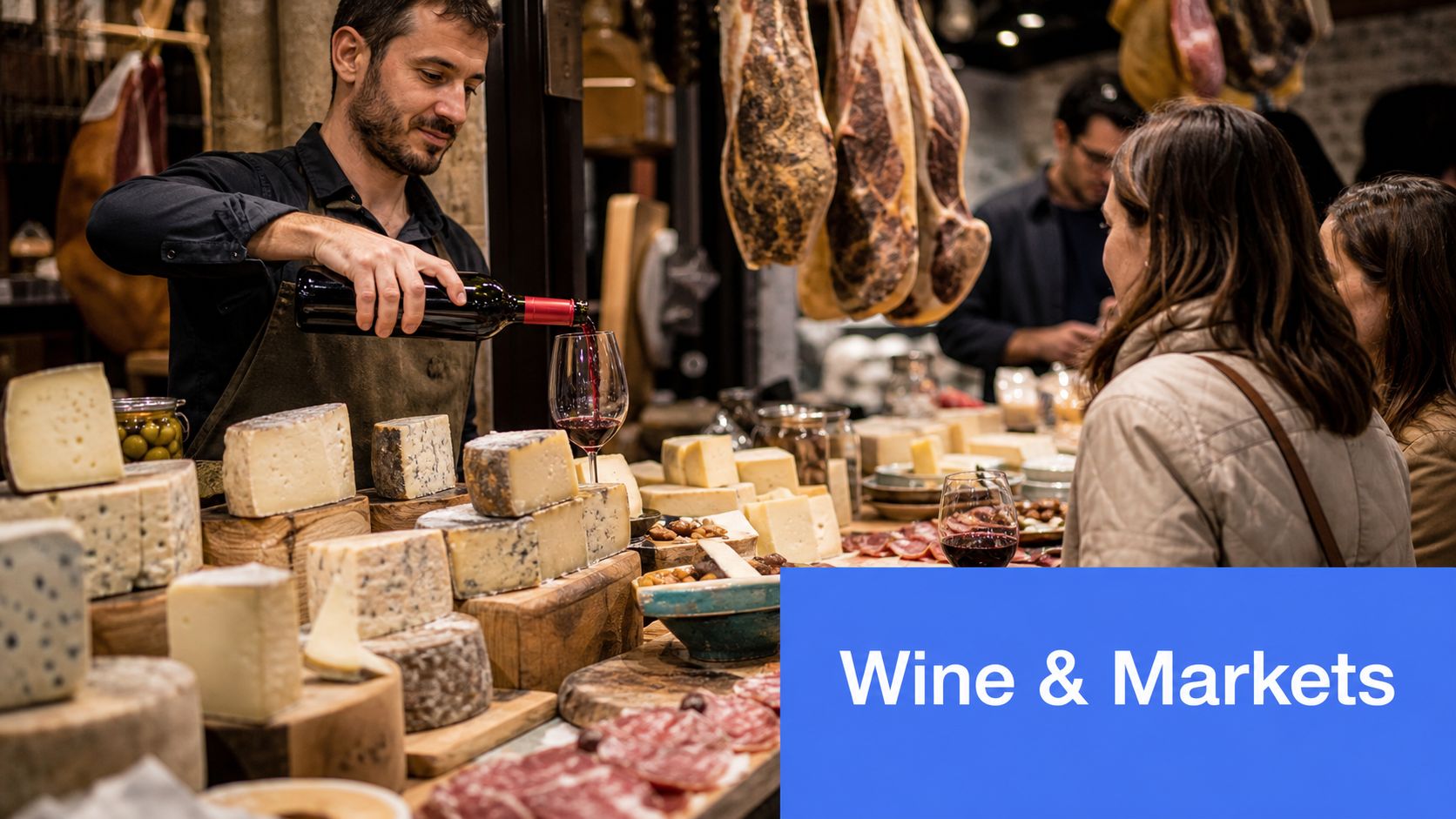
- A market with context: Go with someone who can decode products, not just point at stalls.
- A chef-led moment: Private cooking sessions or kitchen access create a far richer memory than another standard reservation.
- A wine thread: Tie the trip together with a focused tasting, not random glasses at every stop.
For travelers interested in going beyond the city, I often weave in background on Spain's wine regions and their distinct styles before narrowing the tasting strategy.
Madrid also suits a short culinary stay because premium spending is already normalized in this market. In 2024, the city received approximately 11.19 million tourists, and average per-guest spend on premium experiences for a 2-day luxury itinerary exceeds €450 according to the cited industry benchmarks in this summary (Madrid tourism and luxury spend snapshot). That tells you something important. The city knows how to serve the short-stay luxury traveler well.
If this style of trip is your lane, my piece on Michelin-star restaurants in Lima shows how I think about culinary travel beyond just restaurant lists.
3. The Luxury Leisure & Wellness Escape
Madrid isn't only for ambitious sightseeing. It's also a very smart reset city if you approach it correctly.
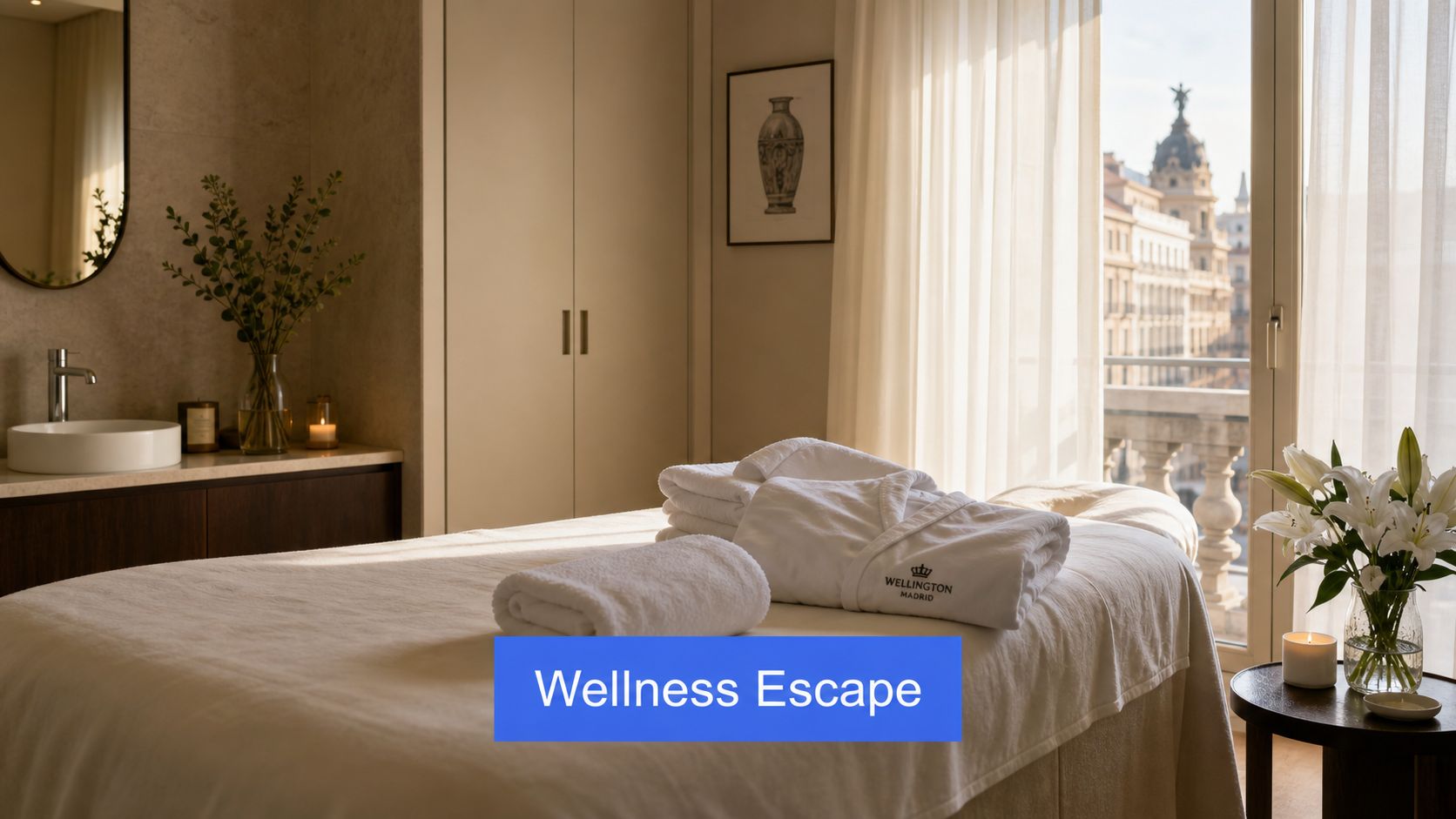
For a C-suite traveler landing depleted, the right 48 hours should feel restorative by the first afternoon. Check into a five-star property with a serious spa, schedule treatment blocks early, then let the city soften around you. A long lunch, a walk through Retiro, an unhurried evening drink, and a single meaningful cultural experience will do more for you than sprinting between monuments.
Quiet luxury works especially well here
More than 90% of luxury travelers actively seek wellness programs when planning their trips, which is why I build wellness into short city breaks instead of treating it as an afterthought (luxury wellness travel demand). Madrid is especially good for this because you can combine urban energy with privacy, spa time, and excellent dining without overcommitting your schedule.
A strong wellness version of 2 days in Madrid often includes:
- A treatment on arrival day: Massage, facial, hydrotherapy, or a customized recovery ritual.
- One guided movement session: Private yoga or Pilates keeps the trip intentional without making it feel busy.
- A reflective evening experience: Flamenco in the right setting can feel meditative rather than performative.
Go easy on breakfast after a big first-night dinner. Madrid's lunches and late dinners are more enjoyable when you don't spend the day overfed and under-rested.
The dominant luxury mood for 2026 is quiet luxury, centered on privacy, peace, and slowness rather than visible excess (2026 quiet luxury direction). That's exactly why a wellness-first Madrid stay works. You're not trying to conquer the city. You're using it well.
4. The Architectural & Design Aficionado's Tour
Madrid rewards people who notice facades, materials, urban rhythm, and adaptive reuse. If you care about architecture, don't spend your two days chasing only the headline sights. Walk the neighborhoods that show how the city evolved.
Begin with a private architectural historian or design-minded guide and look at Madrid through its transitions. Grand civic buildings, early 20th-century elegance, contemporary cultural interventions, and hotel design all sit close enough together to make this surprisingly efficient over 48 hours.
Where design travelers should focus
Spend your first day in the central city, but not in a monument-only way. Look at the relationship between formal avenues and side streets. Notice how Madrid stages power in public buildings, then softens into more intimate residential blocks.
On the second day, shift toward Malasaña and Chueca. Those neighborhoods often reveal more than a polished boulevard ever will. Designers, architects, and interiors-focused travelers usually get the most out of Madrid when they mix formal architecture with studio visits, design shops, and excellent cafés where they can pause and observe.
A smart design itinerary usually includes:
- One historian-led walking block: It creates a narrative, not just a photo collection.
- One hotel inspection with intention: The right property can be as instructive as a museum.
- One neighborhood with no hard endpoint: Good design often appears between appointments.
For an interior designer gathering ideas, this version of Madrid feels especially useful. It's not only beautiful. It's legible. You can see how the city edits itself over time.
5. The Royal Heritage & Historical Narrative Journey
You have two days in Madrid and want the city's power story, not a highlight reel. Choose this version if palaces, dynasties, ceremony, and political turning points interest you more than shopping or nightlife.
Madrid reads especially well through royal history because the key sites sit close together. That makes this persona a smart fit for travelers who want substance without spending half the trip in a car.
Start with the Royal Palace, but book it with intention. Entry hours are limited and can shift by day, so I recommend securing a timed ticket or, better yet, arranging a historian-led private visit before you finalize lunch and dinner plans. The difference is dramatic. You stop seeing ornate rooms as decoration and start understanding them as instruments of image, control, and statecraft.
Build the story, not just the checklist
The best pairing for the palace is a second site that explains what royal power looked like beyond ceremonial rooms. For some travelers, that is the Prado, where court patronage, portraiture, and collecting habits give real context to the monarchy's public identity. For others, it is Plaza Mayor and the Habsburg quarter, where the older fabric of Madrid makes the city's imperial ambitions easier to grasp on foot.
Templo de Debod is the right late-day addition if you want contrast instead of more gilded interiors. It changes the rhythm of the itinerary and gives the historical narrative a wider frame. Madrid was shaped by kings, but it was never only a royal stage set.
Sunset works particularly well here.
A retired professor, history-minded family, or intellectually curious couple usually gets the most from this itinerary by slowing down and choosing interpretation over volume. Cramming every major “must-see” into one day flattens the experience. Palace apartments, dynastic succession, Bourbon versus Habsburg influence, and museum context all require attention if you want the trip to feel memorable rather than dutiful.
My advice is simple. Do one major royal site in depth, one supporting historical district on foot, and one atmospheric stop for the evening. That structure keeps the story coherent and leaves enough mental space to enjoy it.
If you are tempted by a half-day excursion outside central Madrid, only add it if you enjoy historical analysis and are comfortable with tighter logistics. Otherwise, stay in the center and let Madrid tell its story properly.
6. The Neighborhood Deep Dive & Local Authenticity Experience
You arrive in Madrid on a Friday, skip the monument circuit, and spend your 48 hours where the city reveals itself. That means choosing one or two neighborhoods with personality, booking a hotel that lets you move on foot, and leaving room for long lunches, small shops, and street life.
This is the right Madrid persona for travelers who care more about atmosphere than checklist sightseeing. I recommend it most often to repeat Europe visitors, design-minded travelers, photographers, and couples who want the city to feel lived-in rather than staged. If that sounds like you, build your two days around barrios, not big-ticket sites.
Pick a neighborhood lane and commit to it
Malasaña suits travelers who want creative energy, vintage shopping, low-key wine bars, and a younger local crowd. La Latina is stronger for old Madrid texture, vermouth culture, and a slower afternoon rhythm that turns into a lively evening. Lavapiés works best for travelers who want a more international, contemporary version of Madrid and are comfortable with a grittier, less polished mix.
Do not try to “sample” all three in one rushed loop. Two neighborhoods is the limit for a two-day stay if you want any real sense of place.
The smart structure is simple. Sleep near the area you plan to spend the most time in. Walk in the morning, pause for a proper lunch, rest in the late afternoon, then head back out when the neighborhoods come alive again. Madrid rewards timing. Early afternoon can feel sleepy. Evenings are when these areas make sense.
What makes this itinerary work is access. I would arrange one insider-led experience, then protect independent time around it. A journalist, gallery owner, architect, or food writer will give you the context that turns a pretty street into a story. After that, you need freedom to browse a bookshop, stop for anchovies and vermouth, or linger in a ceramics studio without staring at the clock.
Focus on three things:
- One neighborhood host or specialist guide: Choose someone with a real point of view, not a generic walking script.
- One shopping window with taste: Independent fashion, homewares, paper goods, or artisan food shops work better than broad retail wandering.
- One dinner chosen for local rhythm: Go where people settle in, order another bottle, and stay.
This approach also solves a common planning problem. Travelers regularly ask how to enjoy Madrid without spending the whole trip working around crowds, and generic advice rarely gets beyond “go early” (traveler discussion on avoiding the busiest Madrid circuits). The better answer is to choose the right neighborhood, book one excellent local contact, and let the city unfold at street level.
If you are traveling as a pair and want this local-first style to feel personal rather than packed, pair it with a few of these unique vacation ideas for couples. Madrid does intimate, unforced travel exceptionally well.
7. The Romantic Escape & Couples' Experience
A romantic Madrid trip shouldn't feel packed. It should feel beautifully timed.
For honeymooners, anniversary travelers, or couples who need a few days together without logistical friction, I build Madrid around intimacy and rhythm. That usually means a gorgeous room, one excellent shared activity each day, and enough open space for the city to surprise you.
How couples should use their 48 hours
Day 1 should begin softly. Check in, settle, exhale. A couples' spa treatment, an elegant lunch, and an evening stroll work better than trying to “make the most of” every hour. Madrid is a city for late dinners and lingering conversation, so let it be one.
Day 2 is ideal for one shared memory with texture. A private cooking class, a refined tasting, or a neighborhood walk with purposeful shopping all work. Then leave the afternoon open. Couples usually remember the spontaneous parts best.
For 2026 travel planning, shoulder season matters more than ever. Luxury travelers are increasingly prioritizing autumn, with a projected 39% increase in luxury bookings compared with 2024, making September and October especially smart for a Madrid escape with fewer crowds and excellent service access (shoulder season luxury booking trend for 2026)).
If you're planning around a honeymoon, anniversary, or reconnection trip, you'll likely also enjoy my guide to unique vacation ideas for couples.
7 Two-Day Madrid Itineraries Compared
| Itinerary | Implementation Complexity | Resource Requirements | Expected Outcomes | Ideal Use Cases | Key Advantages |
|---|---|---|---|---|---|
| The Classic Art & Culture Deep Dive: Prado, Reina Sofía & Hidden Gallery Circuit | High , advance docent & museum coordination | High , private docents, reserved entries, luxury hotel | Deep, interpretive engagement with masterworks 3/5 | Art collectors, museum enthusiasts, discerning cultural travelers | Private access; curated pacing; expert interpretation |
| The Culinary & Wine Connoisseur's Journey: Michelin Stars, Markets & Bodegas | High , chef & sommelier coordination, timed logistics | Very High , Michelin tables, private tastings, transport to wine regions | Exclusive gastronomic education and rare tastings 3/5 | Food/wine aficionados, celebratory trips, collectors | Chef access; curated pairings; market + Michelin balance |
| The Luxury Leisure & Wellness Escape: Spa, Siesta Culture & Refined Relaxation | Medium , spa scheduling and customized plans | Medium , five‑star spa amenities, wellness staff | Restorative, low‑stress recharge; improved wellbeing 3/5 | Busy executives, spa seekers, pre‑wedding or sabbatical travelers | Deep restoration; aligns with local rhythms; unhurried pacing |
| The Architectural & Design Aficionado's Tour: Modernisme, Contemporary Design & Urban Evolution | Medium‑High , specialist guide and interior access | Medium , architectural historian, studio visits, permissions | Professional design insight and creative inspiration 3/5 | Architects, designers, cultural professionals | Insider architectural access; studio visits; photography guidance |
| The Royal Heritage & Historical Narrative Journey: Palaces, Dynasties & Political History | High , specialist historians & day‑trip logistics | High , private historian, El Escorial transport, archive access | Deep contextual historical narrative and scholarly insight 3/5 | Historians, educators, intellectually curious travelers | Specialist context; cohesive narrative across sites; archival opportunities |
| The Neighborhood Deep Dive & Local Authenticity Experience: Vibrant Barrios, Artisan Culture & Contemporary Spain | Medium , vetting local insiders and contacts | Medium , local guides, artisan introductions, workshops | Genuine local engagement and contemporary cultural insight 3/5 | Creatives, slow travelers, culturally curious visitors | Authentic connections; supports locals; flexible, discovery‑led days |
| The Romantic Escape & Couples' Experience: Intimate Moments, Luxury Accommodation & Shared Discovery | Medium , personalized surprises and timed experiences | High , suite upgrades, private experiences, tailored services | Highly personalized romantic moments and memorable shared time 3/5 | Honeymooners, anniversaries, couples seeking reconnection | Deep personalization; romantic amenities; stress‑free logistics |
Design Your Bespoke Madrid Itinerary
You land in Madrid on a Friday, check into the right hotel, and by lunch you are already in the version of the city that suits you best. That might mean a private Prado visit and dinner near the Salesas galleries. It might mean a vermouth stop in La Latina, a market lunch, and a table at one of the city's strongest wine programs. It might mean a slower rhythm altogether, with a polished spa, long walks through Retiro, and late afternoons reserved for terraces and room service. That is how to do 2 days in Madrid well. If your short city break leaves you wanting a longer culture-focused trip, my seven-day luxury Morocco itinerary is another route to consider.
The best short Madrid trips are built around a traveler's priorities, not a generic checklist. Two full days gives you enough time for one major cultural anchor each day, excellent meals, and a real sense of place, but only if the pacing is right. Try to do everything and Madrid feels rushed. Choose your version of the city and it feels smart, stylish, and satisfying.
That is the point of the seven curated itineraries above. The Art & Culture traveler should stay close to the Prado, Salamanca, or Las Letras to cut transit time and protect museum hours. The Culinary & Wine guest should prioritize neighborhoods and reservations, because Madrid's best tables and tasting experiences often shape the day. The Luxury Leisure traveler needs a hotel with strong wellness facilities and easy access to Retiro or elegant shopping streets. The design lover, history enthusiast, neighborhood explorer, and romantic couple each need a different rhythm, different geography, and different advance planning.
I plan these short European city breaks for busy professionals, couples, and luxury travelers who want every hour to count. That means choosing the right base, securing the bookings that matter most, spacing out museums and meals so the day stays comfortable, and arranging trusted local support when it improves the experience.
Madrid rewards early decisions. The most desirable hotels, private guides, and sought-after dining reservations are easiest to secure well ahead of arrival, especially in spring and fall when the city is at its best. If you are visiting during major fairs, holiday periods, or peak cultural weeks, planning late limits your options fast.
Whether you are based in Miami or planning from anywhere in the U.S., I work with clients virtually to build highly personalized itineraries with preferred partner perks, thoughtful pacing, and insider recommendations that make a short trip feel far richer than its length.
About the Author
Hi, I'm Karrah, owner, founder, and lead travel advisor at Explore Effortlessly, a luxury award winning travel agency based in Miami.
I specialize in designing bespoke, high touch itineraries to bucket list destinations around the world. Every trip is curated with intention, insight, and efficient logistics from start to finish. From luxury cruises and private villas to honeymoons, safaris, and once in a lifetime journeys, my role is to simplify the planning process and improve every detail. As a Circle of Excellence Advisor and CLIA Accredited Cruise Counselor, I bring the expertise needed to make your trip polished, personal, and exceptionally well organized.
If you want 2 days in Madrid to feel polished, personal, and easy instead of rushed and generic, plan my luxury trip with Explore Effortlessly. I'll help you choose the right version of Madrid, secure the experiences worth your time, and coordinate the details that busy travelers do not have time to manage themselves. You can also join the newsletter for more curated travel insight and inspiration through the Explore Effortlessly newsletter.